

Le LinkedIn Social Selling Index est l'un des scores les plus cités dans les équipes sales B2B — et l'un des plus mal interprétés. Beaucoup de managers le traitent comme un KPI de performance. C'est une erreur de catégorie.
Qu'est-ce que le LinkedIn Social Selling Index mesure concrètement ?
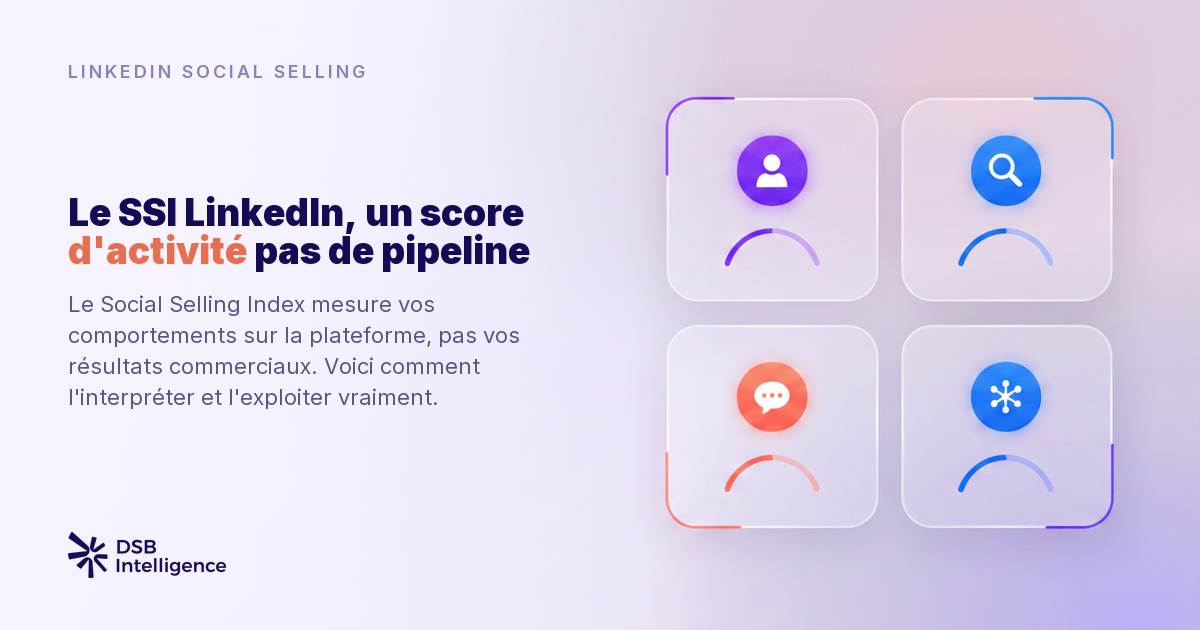
Le LinkedIn Social Selling Index mesure quatre comportements distincts, chacun noté sur 25 points.
Premier pilier : « Établir ta marque professionnelle » — LinkedIn évalue la complétude de ton profil, la présence d'une photo, d'un résumé, de recommandations, et ta fréquence de publication. C'est un score de présence, pas d'influence.
Deuxième pilier : « Trouver les bonnes personnes » — Il mesure ton utilisation des fonctions de recherche et de Sales Navigator pour identifier des prospects. Plus tu fais de recherches ciblées, plus ce pilier monte.
Troisième pilier : « Interagir avec des insights » — LinkedIn comptabilise tes interactions avec des contenus (likes, commentaires, partages) et ta participation à des conversations de ton secteur.
Quatrième pilier : « Développer tes relations » — Il reflète la croissance de ton réseau, notamment les connexions avec des décideurs et l'acceptation de tes demandes de connexion.
Ces quatre piliers sont publiquement documentés par LinkedIn. Aucun mystère sur la mécanique — ce qui est intéressant, c'est ce qu'ils ne mesurent pas.
Pourquoi le SSI ne prédit pas ton pipeline ?
Le SSI mesure des inputs comportementaux, pas des outputs commerciaux. C'est la distinction fondamentale.
Tu peux avoir un SSI de 85 et ne générer aucune opportunité qualifiée. Tu peux avoir un SSI de 55 et closer trois deals par trimestre grâce à des conversations hors-plateforme. Le score ne voit pas tes emails, tes appels, tes démos, ni tes contrats signés.
LinkedIn a un intérêt direct à ce que tu utilises intensément sa plateforme. Le SSI est conçu pour mesurer et récompenser cette utilisation — pas pour mesurer ton efficacité commerciale. Ce n'est pas un défaut du score, c'est sa nature.
Le risque concret : une équipe sales qui optimise son SSI collectif peut augmenter son activité LinkedIn sans augmenter son pipeline. Elle publie plus, commente plus, connecte plus — et confond le mouvement avec la progression.
Les métriques qui prédisent réellement la performance commerciale sur LinkedIn sont ailleurs : le taux de réponse aux InMails, le ratio connexion → conversation, le nombre de décideurs atteints dans un compte cible. Ces données ne sont pas dans le SSI. Pour comprendre comment les impressions organiques s'articulent avec ces signaux, l'article Impressions LinkedIn : ce que le chiffre signifie vraiment développe la lecture correcte de ces métriques.
Comment lire son score SSI sans se tromper de boussole ?
Le SSI devient utile quand tu l'utilises comme diagnostic de comportement, pas comme objectif.
Commence par regarder la distribution des 4 piliers, pas le total. Un score global de 65 peut cacher un profil à 20/25 sur trois piliers et 5/25 sur le quatrième. Ce pilier faible est ton levier — il a plus de marge d'amélioration que les trois autres réunis.
LinkedIn affiche aussi ton rang percentile dans ton secteur et parmi tes connexions directes. Ce benchmark relatif est plus actionnable que le score absolu. Un score de 60 dans un secteur où la médiane est à 35 est un signal différent d'un score de 60 dans un secteur où la médiane est à 70.
L'Insight Narrator de DSB Intelligence est conçu pour croiser le SSI avec tes métriques de reach réel — pour signaler, par exemple, quand ton score d'engagement monte pendant que tes impressions organiques stagnent, ce qui indique que tu commentes beaucoup sans que ton propre contenu performe. Pour aller plus loin sur l'écart entre impressions et audience réelle, LinkedIn Impressions vs Members Reached : ce que l'écart révèle pose le cadre d'analyse.
Le SSI de ton réseau (score moyen de tes connexions, affiché dans le tableau de bord) donne un signal complémentaire sur la qualité de ton audience. Un réseau à SSI moyen élevé indique des connexions actives sur la plateforme — ce qui augmente mécaniquement la probabilité que ton contenu soit vu et interagi.
Quels comportements faire évoluer pour un SSI plus représentatif ?
Optimiser le SSI pour qu'il reflète une activité commerciale réelle, pas juste du volume, demande de cibler les bons comportements dans chaque pilier.
Sur le pilier « trouver les bonnes personnes » : utilise les filtres de recherche pour cibler des décideurs dans des comptes nommés, pas pour faire du volume de recherche. LinkedIn récompense la précision autant que la fréquence.
Sur le pilier « interagir avec des insights » : commente des posts de prospects cibles plutôt que de liker des contenus génériques. Un commentaire substantiel sur le post d'un décideur vaut plus pour ton pipeline qu'une dizaine de likes sur des contenus de ta bulle.
Sur le pilier « développer tes relations » : la qualité des connexions compte. Connecter avec des profils hors de ta cible commerciale fait monter le score mais dilue ton réseau. La stratégie de contenu qui alimente ces connexions est détaillée dans LinkedIn Content Strategy B2B : arrête de planifier dans le vide.
Sur le pilier « marque professionnelle » : la régularité de publication est pondérée. Deux posts par semaine sur 8 semaines valent plus qu'un burst de 10 posts en une semaine suivi d'un silence. Le rythme compte autant que le volume. Si tu diffuses aussi ton contenu LinkedIn en dehors de la plateforme, LinkedIn RSS Feed sur ton site : ce qui marche en 2026 couvre les options concrètes.
Le SSI dans un contexte d'équipe : usage et limites
Les managers sales utilisent parfois le SSI pour comparer les membres de leur équipe. C'est un usage légitime — avec des précautions.
Le SSI n'est pas comparable entre des rôles différents. Un Account Executive qui fait beaucoup de recherche de prospects aura mécaniquement un pilier « trouver les bonnes personnes » plus élevé qu'un Customer Success Manager dont le travail est relationnel. Comparer leurs scores globaux revient à comparer des profils d'activité structurellement distincts.
L'usage pertinent en équipe : suivre l'évolution du score d'un même profil dans le temps, pas le comparer à un collègue avec un rôle différent. Une progression de 10 points sur le pilier « développer tes relations » pour un AE qui travaille un nouveau segment est un signal utile. Un score absolu de 72 vs 68 entre deux AEs du même segment l'est beaucoup moins.
Le SSI d'équipe agrégé peut servir de thermomètre d'adoption de LinkedIn comme canal — pas de performance commerciale. Si le score moyen de l'équipe stagne pendant un trimestre où le pipeline progresse, c'est un signal que l'activité LinkedIn n'est pas le driver principal. Si les deux régressent ensemble, la corrélation mérite investigation. Pour les équipes qui pilotent aussi des campagnes payantes en parallèle, LinkedIn Advertising B2B : pourquoi tes campagnes sous-performent complète le tableau de bord.
Et maintenant ?
- Ouvre ton tableau de bord SSI et regarde la distribution des 4 piliers — pas le total. Identifie celui qui est le plus bas : c'est ton seul levier actionnable cette semaine.
- Identifie le benchmark de ton secteur (affiché dans le tableau de bord LinkedIn). Si ton score est au-dessus de la médiane sectorielle, le SSI n'est plus ton problème prioritaire — concentre-toi sur les métriques de pipeline.
- Croise ton évolution SSI avec tes métriques de reach organique sur les 30 derniers jours. Si les deux progressent ensemble, tu construis quelque chose de cohérent. Si le SSI monte et le reach stagne, tu optimises le mauvais signal.
- Mets en place un suivi mensuel du SSI par pilier pour chaque membre de ton équipe sales — pas pour les comparer entre eux, mais pour détecter les régressions individuelles avant qu'elles deviennent des habitudes.
Teste DSB Intelligence pour croiser automatiquement tes données SSI avec tes métriques de reach et d'engagement LinkedIn — sans jongler entre plusieurs tableaux de bord.